The 2025/5 edition of Cement contains a wide range of interesting articles without a specific theme. This issue features, among others, contributions on the Meelfabriek in Leiden, the new Eurocode 2, elastically supported hollow-core slabs, calculations involving imperfections, and the transition to green concrete.
New among the old
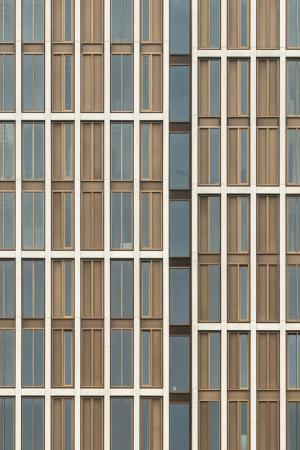
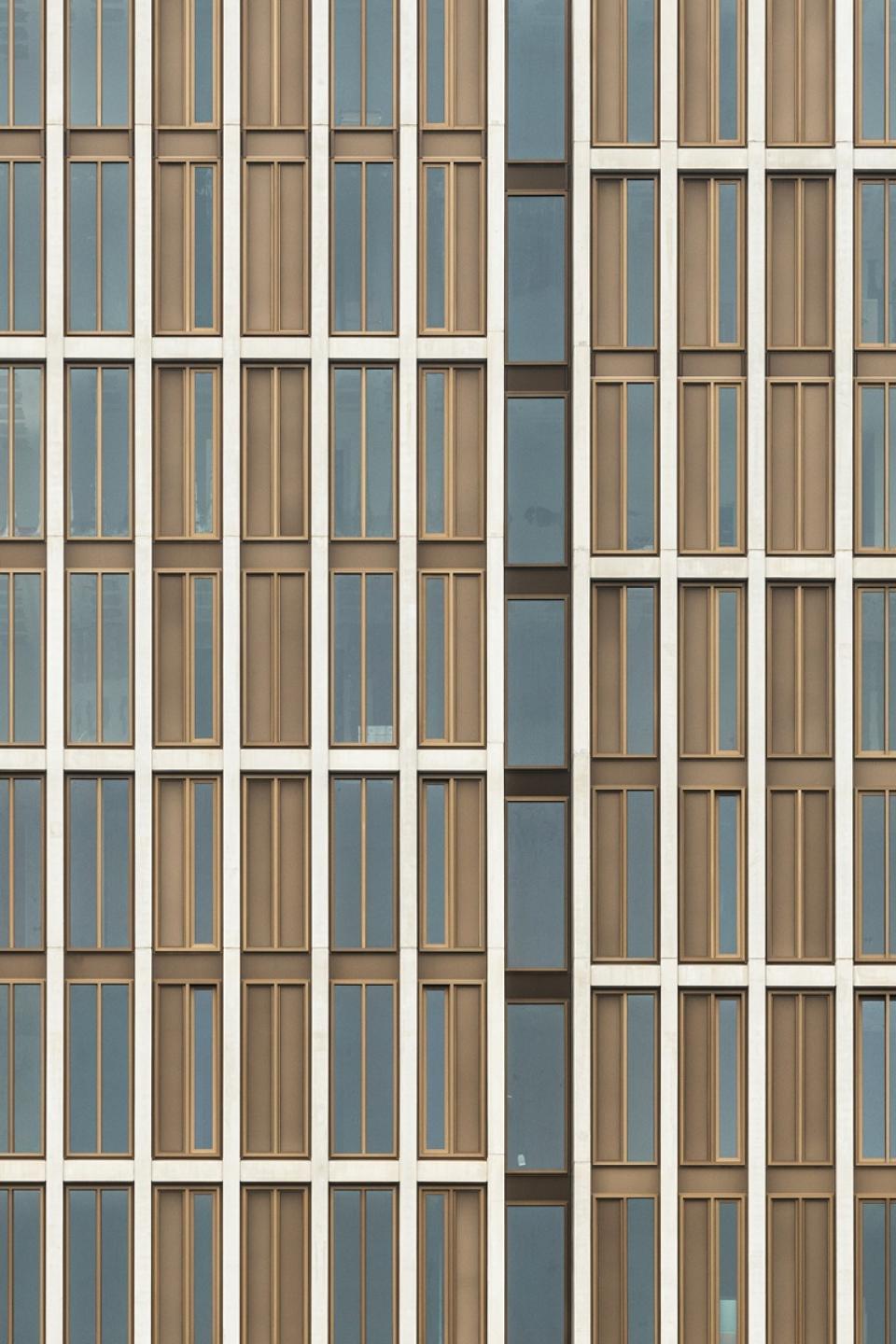
Meelfabriek (2): New construction on an existing industrial complex
Author:
ir. Rob Doomen, Pieters
The Meelfabriek in Leiden is undergoing a large-scale transformation, redeveloping an industrial complex into a multifunctional residential area. Monumental historic buildings are being renovated while new buildings are added. In this second article of a three-part series, the structural design of two new structures is explained: the parking garage and the Singeltoren.
Design of non-rigidly supported hollow-core slabs
Explanation of calculation rules in NEN 6726-2
Author:
ing. Ronald Klein-Holte, VBI Ontwikkeling
Prestressed hollow-core slabs are often supported on concrete or steel beams integrated into the slab, known as integrated beams, resulting in non-rigid support conditions. Research in Finland during the 1990s showed that instead of the beam, the hollow-core slab itself failed prematurely. Follow-up studies revealed that the shear resistance of the slab was influenced by the behavior of the integrated beam. To better understand this, 31 full-scale tests were conducted across Europe, mainly in Finland and Germany. Based on these, design rules were developed and included in Annex A of the recently published standard NEN 6726-2.
Column Rico Zweers
The digital construction kit: From LEGO bricks to AI algorithms
LEGO Serious Play entered my mind at just the right moment. What began as curiosity about an alternative workshop method grew into a fascination with how we can visualize and solve complex problems.
Ready, set… recycle!
Concrete in images: Korbach Town Hall
Author:
ir. Kirsten Hannema
A brutalist concrete annex of the town hall in Korbach, Germany, was demolished to make way for a contemporary new wing built using recycled building materials. The annex consisted of 95% mineral building materials, mainly concrete, which was reused as aggregate in the new concrete. Architectural firm Heimspiel collaborated with Professor Anja Rosen, an urban mining expert, to develop the concept. This is the first project in Germany where recycled concrete from a demolition-newbuild project was processed on site at the same location.
Overview of changes in Eurocode 2
The new Eurocode 2 contains many revisions
Author:
ir. Hans Galjaard
Within a few years, the next generation of Eurocodes will come into effect, including the section on concrete structures (Eurocode 2, NEN-EN 1992-1-1). This article provides an overview of the most important changes.
Read in Structural Concrete 26/3
Structural Concrete Vol. 26/3 (June 2025) contains a wide range of papers. A selection of those most relevant for Cement readers is summarized:
Structural Engineer: influential and visible
Structural Engineer of the Year on stage (1)
In June of this year, Rob Doomen and Rayaan Ajouz were named Structural Engineer and Talent of the Year, respectively. Over the coming twelve months, they will contribute to Cement on important themes in the field, drawing attention to the added value of the structural engineer and the visibility of the profession.
Concrete transition analyzed
From concept to reality: a multi-layered analysis
Authors:
dr. Yirang Lim, Muhammad Artono MSc, prof.dr.ir. Guang Ye, dr.ir. Johan Ninan; Faculty of Civil Engineering and Geosciences, TU Delft
In the ambition to reduce greenhouse gas emissions, green concrete – with a significantly smaller CO? footprint than conventional concrete – plays a central role. For a sector-wide transition to this material, economic, institutional, social, and technical obstacles must be overcome. At TU Delft, the dynamics of this concrete transition in the Netherlands have been studied, with a focus on how clients can accelerate integration. Three case studies were analyzed.
Geometric imperfections
Practical calculations (28)
Author:
ing. Jorrit van Ingen MSEng RC, WSP
With today’s software, engineers can calculate more precisely than ever before, modeling structures in meticulous detail. On paper, everything is exact and straight, with no fitting issues. In practice, however, where structures are built in all weather conditions, accuracy is limited, leading to small deviations such as misalignments. NEN-EN 13670 specifies the permissible tolerances for execution. Structures are designed to accommodate these deviations by correctly applying the calculation rules in NEN-EN 1992-1-1, paragraph 5.2.







Reacties